Posts

Panama 4

Image
3/4 of the population of Panama is Roman Catholic, with Protestantism being second at 20%. The most densely settled areas of the country are along the canal where the country is lowest and narrowest. The least densely populated are is the eastern third of the county, especially along the Atlantic slopes of the mountains. Panama is a young country with over half of the population under age 30, and almost 75% of the population under age 45. Nearly 70% of the population lives in urban areas, and the majority of their economy is based on service jobs thanks to off shore banking, and canal traffic. Agriculture and fishing account for less than 10% of the GDP, but represents nearly 20% of the workforce. Today's tea is dragonwell. This is a pan-fired Chinese green tea known for its nutty flavor. The color variation of the leaves is due to the pan-firing process. This is a more delicate tea, and is said to also cut the greasiness of food with its light flavor. It is also used as a p...
Panama 3

Image
In the 16th century, Spaniards came to the isthmus which was occupied by Kuna, Guaymí, Chocó, and other native groups. The population soon became mixed between Spanish and native ancestry. During colonial times, people from Africa were brought as slaves. They were also incorporated into the ethnic mix over time. During the 19th century, construction of the railroad brought in people from the United States, China, and France. During the construction of the canal, large numbers of people from the West Indes settled in Panama. The United States has influenced the economy and culture of Panama greatly. Most US citizens live in the canal area, and Panama City. Panama was also a haven for Spanish and Portuguese Jews fleeing the inquisition. While Spanish is the official language of Panama, mother tongues of the native Americans, and English are commonly spoken as well. Recorded history of Panama begins with European exploration in 1501 with Spaniard Rodrigo de Bastidas, Juan de la Cosa, an...

Panama 2

Image
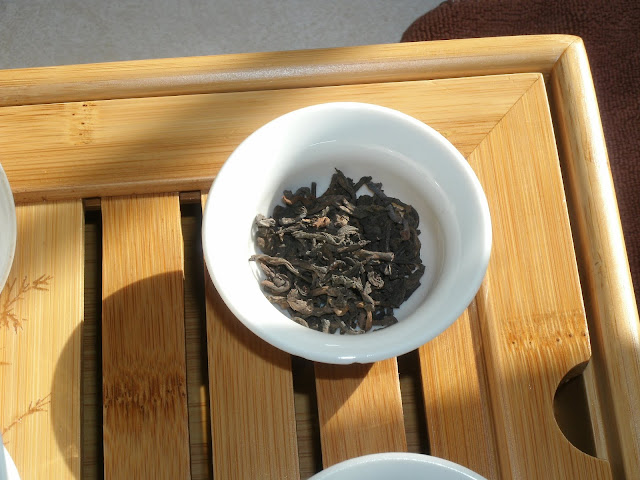
In spite of its small area, there are many different landscape regions in Panama thanks to the mountains. There are low lying tidal areas on the coast, tropical rain forests, savannahs, and cool montaine forests. They also have a wide variety of plant and animal life as it was the only land bridge for species to cross the continents. One sixth of the nation's land area is designated as national parks. The uniqueness of some of them have earned UNESCO's designation on the World Heritage List. While the canal zone is known for cosmopolitan urban culture, the rural culture of the savannahs focus on Hispanic traditions of folk songs, and handicrafts. Some groups have a strong tradition of storytelling including epic poetry. Today we are exploring oolong tea - a tea that straddles the line between green tea and black tea. This is a tea of contrasts, just like the different regions of Panama. Oolong is described as being well-rounded in taste and preparation. It is said to tam...

Panama 1

Image
Panama is best known for its canal, a project undertaken to shorten shipping routes around the American continents. On December 31, 1999, the United States relinquished control of the canal to Panama making it an independent nation once again. The canal left its mark on Panama in many ways, including the introduction of other cultures and cultural practices to the region. Panama is a long, narrow country between Costa Rica and Columbia. The lengthwise center of the country is marked by mountains, with a depression in the middle where the canal was built. The mountains also cause vastly different climates with the Caribbean Sea side being wet, and the Pacific Ocean side being dry. Since the country is in the tropical region, it is warm year round. Panama's culture is a blend of African, Native American, North American, and Spanish influences expressed through traditional arts and crafts, music, religion, and cuisine. I found reference to Chinese influence on food, especially di...

Mexico

Image
Today we travel to Mexico . While I've never been there, I hear that they also have poinsettia plants growing as wild bushes outside. I encountered these in Kenya, and somehow this came up in conversation with a co-worker who was familiar with Mexico. Most of what I know about this country is that college students liked taking cut rate trips there over spring break, and came home complaining of being sick from the bad (cheap) food provided at the resort. Apparently they all thought that they were immune to the copious quantities of alcohol they were consuming, and it was the dry white toast they were eating the next morning that made them feel bad. Thankfully there is more to Mexico that drunken college students. They are the third largest Latin American country behind Brazil and Argentina. More than half of the population lives in the central portion of the country as the north is described as being arid, and the south as being tropical. They are described as having a history of...

Medicinal teas in the US

Image
In exploring the types of teas offered in the US, I'm including a popular brand of herbal medicinals. A friend gave me these teas for Christmas. They commented that they didn't know how good they were, but figured I could give them a try. I know that some people with asthma swear by the breathe easy tea, but I decided to start easy with the echinacea tea. I have an easy time believing that echinacea flowers were used in herbal preparations in the past because the flowers grow here so abundantly in the summer. All of these teas are blends of several herbs, so I'm not sure of how local all of the ingredients would be to this region (okay, I highly doubt West Indian lemongrass is grown naturally anywhere around here). So I poured my hot water over the bag, and steeped covered for 10 min. The instructions say 10-15 minutes, and they are very specific that the cup should be covered. Here's the resulting brew. It wasn't nearly as dark as I remember ...

Bahamas

Image
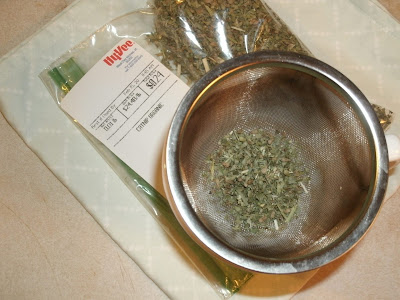
Today we head for the Bahamas to sample a tea often illustrated in children's stories. Especially stories about cats... I was a bit incredulous when I learned that some people actually drink catnip tea. The video I watched talked about a lot of different herbal cures, and catnip tea was the only one I recognized. They described the tea as being bitter, so I wasn't holding out much hope. When I checked the bulk spice section of the grocery store, sure enough, they had catnip labeled as an herbal supplement. I'm assuming that it is really old because it doesn't really smell like catnip. Unfortunately I had to buy quite a bit in order to get it to register on the scales when I was buying it. Here it is awaiting hot water. Sad old catnip in a wire strainer. You can tell that I'm really excited to try this. I let the tea steep for about 3 1/2 - 4 minutes and decided to try it. Yes, I really did make catnip tea in a mug with a cat on it. When I was l...