Posts

Exploring water

Image
Those who are not into tea may not realize that there are lengthy discussions about what type of water for tea brewing. Some nomadic tribes melt snow to make their tea because that is the most readily available source of water. Most sources recommend filtered tap water, which is what I drink on a daily basis anyway. Some people say that you should not brew tea with hard water because some of the flavor gets caught in the hard water mineral scum that ends up on your cup. Filtered tap water does not eliminate the hard water minerals, but it does get rid of the chlorine in the water. Since my local utility is upgrading the water system and digging new wells, chlorine is a major problem in our water some days. Spring water, artesian water, reverse osmosis water are all waters recommended for brewing (as long as the spring water doesn't have too many minerals in it). Distilled water contains no minerals, and is not recommended for tea brewing saying that it makes for a flat brew. Me be...

I have no luck

Image
The tea pet that I ordered in April finally came! It was on back order. While cats don't normally like water, they are featured as tea pets in the form of the waving or beckoning cat. Things all look fine and good until I show you that kitty is supposed to be holding a fan. While my good luck bat (yes some countries consider bats to be good luck) arrived with a broken ear having been shipped wrapped in bubble wrap and a big envelope, kitty came inside of bubble wrap in a box with more bubble wrap inside of a larger box with bags of air! Still broken! Time to check out my return options, and quite possibly bust out the tube of super glue again.

Mother's day discounts and a new tea pet

Image
Thanks to a mother's day discount code, I ordered yet another box of tea. I currently have a stack of 10, yes 10 tea menus on my table. I was cleaning house a couple of weeks ago, and kept putting the tea menues in the same place. I keep reminding myself that booze and associated accessories cost a lot more. That said, I did order some of the more expensive teas I like because I got 10% off. So I got an old favorite, Ryokucha. This is a pan fired Japanese green tea. It has a bright, grassy scent, and is a beautiful bright yellow color. I've had a rough couple of weeks, so I also did a little online retail therapy and bought a tea pet I've been eyeing for about a year. I found it at a good price. Unfortunately it arrived broken. Since I was too tired to deal with sending it back, I opted for a refund and some super glue. I may opt to replace it with a new one that is not broken at some point, but a bat with a broken ear seems to be emblematic of my life right now. So what ...

Going batty and making lace

Image
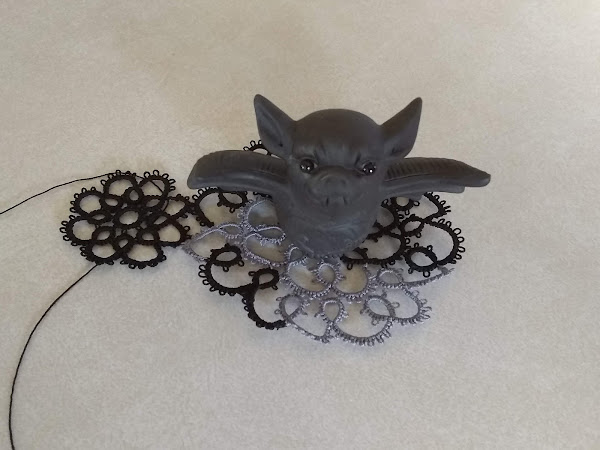
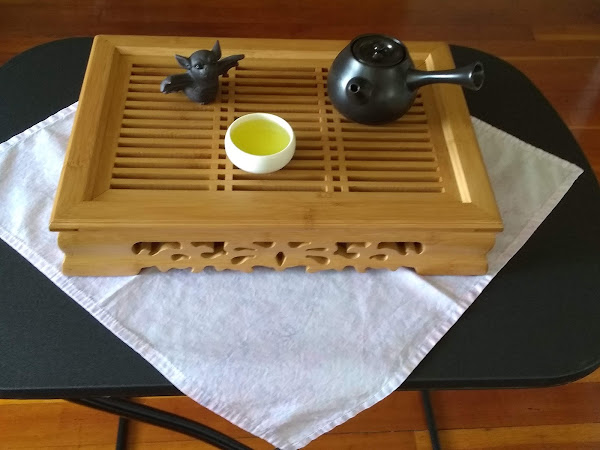
I have some books about the history and science of making tea that would be fun to explore for this blog. I'm just feeling a little too overwhelmed by life to explore those right now. In the mean time, enjoy a picture of my new tea pet, and a lace doily that I'm working on. The doily is for a lace contest this summer. We are to make a piece of lace depicting the moon. If all goes right, I will be tatting the 8 phases of the moon to go around the edge of the doily. I made the center black with a gray stripe for the Milky Way. I have some silver seed beads to sew onto it for stars. Making the new moon, full moon, and quarter moons are straightforward and easy. I'm still working on methods to make the gibbous and crescent moons. Attempt #1 is a no. I'll keep working on it. Meanwhile, I hope that my bad doesn't poop on my work. Life is already pooping on me enough.

Osmanthus Oolong

Image
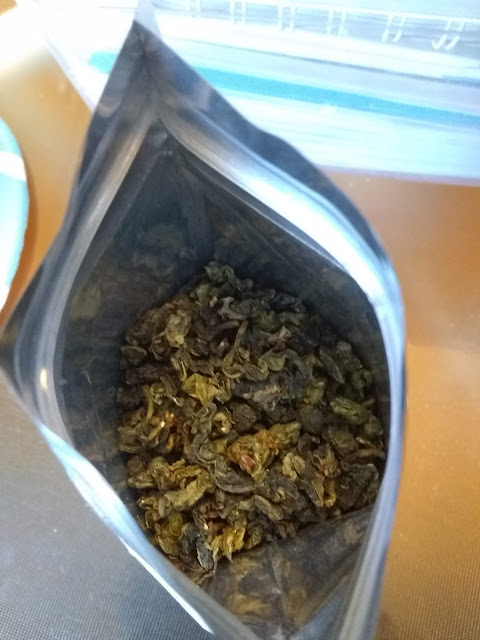
 I got a new box of tea a couple of weeks ago. I got one new flavor of tea in that box. An oolong tea. I thought I had ordered a dark oolong, but when I opened the bag, I found a very familiar looking type of oolong.  It's a light oolong that is a slightly looser roll than other light oolongs I have had. When I double checked the website where I ordered the tea, I found that I had indeed ordered the light oolong tea. I had been debating between 2 oolongs, and thought that I had ordered the dark one. Oh well, I like light oolongs, too. This particular tea is scented with osmanthus flowers for a light, sweet flavor.  Osmanthus is a small, unassuming flower that grows on established osmanthus plants in eastern Asia. 29 different cultivars have been developed. I don't know which cultivar this one is scented with. In fact, I have no clue what osmanthus flowers smell like. When I opened the bag of tea, I smelled tea with a hint of something else. I did not get a strong floral ...

Kiribati

Image
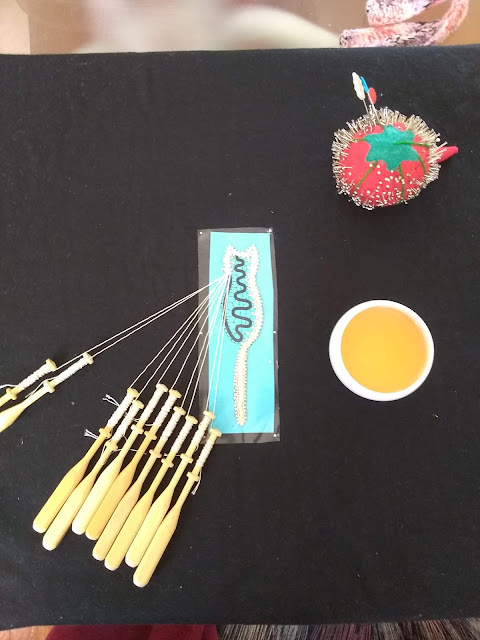
 The last stop I have planned is Kiribati . This republic of 33 coral atolls and islands in the central Pacific straddle both the equator and the international date line. There are several island groupings (Gilbert, Banaba, Line, and Phoenix islands) in this republic although the majority of the population lives on the Gilbert islands. Rising ocean levels from global warming are threatening these islands where people mainly depend on fishing and growing bananas, breadfruit, papaws, and taro. In my research, I found mention that tea is popular and is readily available at bars and restaurants. I didn't find anything specific about what type of tea they like, but the picture looked like it was green tea. Contrary to the popular pictures of "green" tea on the internet, the liquid made by steeping green tea leaves is not bright green. It's more of a bright yellow. That is green tea in the cup, note it is NOT green in color. I'm also working on a bobbin lace cat bookmar...

Solomon Islands

Image
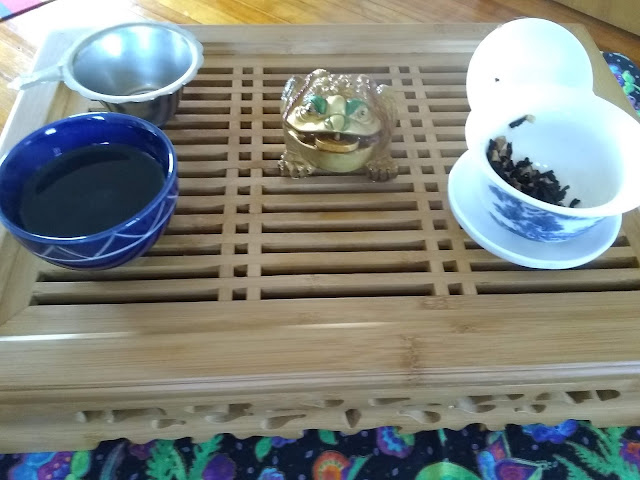
 I have 2 places left to visit. The Solomon Islands, and Kiribati. Yes, there were many countries that were left out, but these are the last 2 places where I found information about popular teas in the region. While I initially found kava tea at the top of the list, I also found a popular brand of tea with more traditional teas and flavors. I was intrigued to see that pu erh was at the top of the list.  Pu erh tea is a "newer" style of tea dating from the Ming dynasty (1368-1644). This type of tea became very popular in the early 2000s causing a sales boom. Since this time, the market has stabilized. Pu erh is made in 4 tea growing regions in southern China in a region close to Thailand, Laos, Vietnam, and Myanmar. There are 2 different ways of making pu erh tea. Both processes start with pan frying to inactivate enzymes, and sun drying to make a loose raw tea. These loose leaves can be compressed, and aged by storing for "raw" pu erh tea. The alternate method take...